


免职声明:本网站为公益性网站,部分信息来自网络,如果涉及贵网站的知识产权,请及时反馈,我们承诺第一时间删除!
This website is a public welfare website, part of the information from the Internet, if it involves the intellectual property rights of your website, please timely feedback, we promise to delete the first time.
电话Tel: 13002979178 OR 邮箱Email: Lngbbs@qq.com
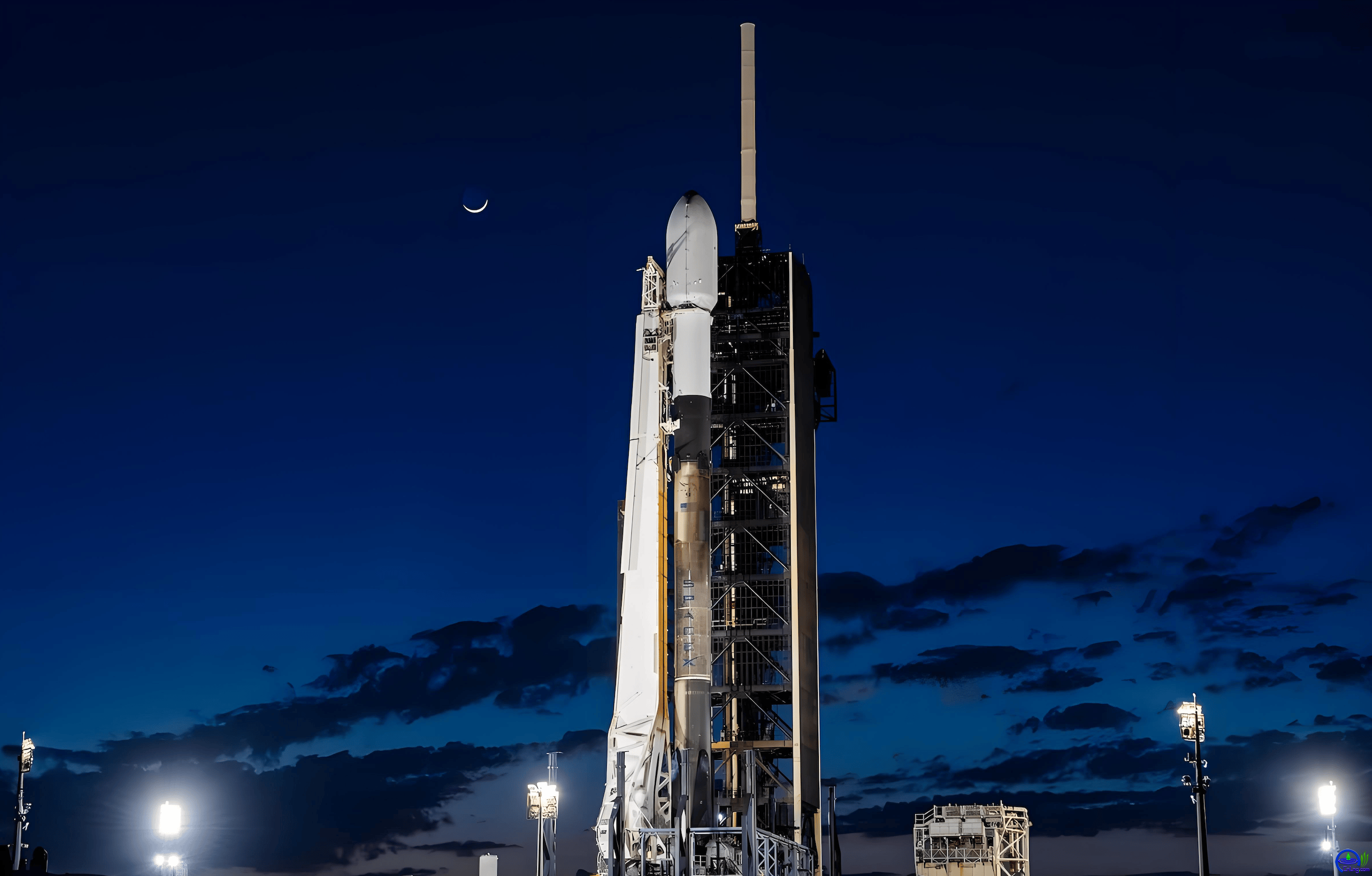
摘要:近日,美国太空探索技术公司(SpaceX)正式递交首次公开募股(IPO)申请。据报道,其目标估值约1.75万亿美元,计划融资750亿至800亿美元,融资规模之大刷新全球资本市场历史纪录,也再次引发关于太空经济的热议。近年来,从亚马逊的太空互联网项目“柯伊伯计划”加速组网,到中国“千帆星座”验证“一箭多星”发射能力,再到欧洲加速布局太空数据基础设施,全球太空经济的发展步伐日益加快。
|
近日,美国太空探索技术公司(SpaceX)正式递交首次公开募股(IPO)申请。据报道,其目标估值约1.75万亿美元,计划融资750亿至800亿美元,融资规模之大刷新全球资本市场历史纪录,也再次引发关于太空经济的热议。近年来,从亚马逊的太空互联网项目“柯伊伯计划”加速组网,到中国“千帆星座”验证“一箭多星”发射能力,再到欧洲加速布局太空数据基础设施,全球太空经济的发展步伐日益加快。 Recently, the American space exploration technology company SpaceX officially submitted an initial public offering (IPO) application. It is reported that its target valuation is approximately 1.75 trillion US dollars, and it plans to raise 75 to 80 billion US dollars. The scale of this financing is unprecedented in the global capital market history and has once again sparked heated discussions about the space economy. In recent years, from Amazon's space internet project "Kuiper Plan" accelerating network construction, to China's "Qianfan Constellation" verifying the "one rocket with multiple satellites" launch capability, and to Europe's accelerated layout of space data infrastructure, the development pace of the global space economy has been accelerating day by day. 太空经济,作为人类开发和利用地球大气层以外宇宙空间的经济活动总和,早已超越传统的卫星通信与导航范畴。它正演变为一个涵盖航天器与卫星制造、发射服务、太空算力、太空光伏乃至太空旅游的庞大产业集群,2025年全球运载火箭发射次数与发射质量均创下历史新高。世界经济论坛等机构预测,到2035年,全球太空经济规模有望突破1.8万亿美元,成为拉动全球经济增长的新引擎。 The space economy, which represents the total economic activities of human beings in developing and utilizing the space beyond the Earth's atmosphere, has long gone beyond the traditional scope of satellite communication and navigation. It is evolving into a vast industrial cluster encompassing spacecraft and satellite manufacturing, launch services, space computing power, space photovoltaics, and even space tourism. In 2025, the number and launch mass of global carrier rockets reached record highs. Institutions such as the World Economic Forum predict that by 2035, the global space economy is expected to exceed 1.8 trillion US dollars, becoming a new engine driving global economic growth. 在这场逐梦苍穹的浪潮中,几条新兴赛道尤为引人瞩目。随着人工智能的爆发式增长,“天数天算”成为刚需,将算力部署到太空、实现数据在轨实时处理的太空算力产业,成为各国战略竞争的新高地,以SpaceX、亚马逊为代表的科技公司也制定了雄心勃勃的发展计划。与此同时,太空光伏的巨大潜力正在展现,在太空部署大型太阳能电站,不仅能解决在轨设施的能源焦虑,未来还有望通过微波或激光将清洁电力无线传输回地面。此外,依托日益成熟的运输系统,太空科研、太空制造、太空医疗、太空旅游等,正逐步从概念向商业化落地。 In this wave of pursuing dreams in the sky, several emerging fields stand out particularly. With the explosive growth of artificial intelligence, "space computing" has become a necessity. The space computing industry, which deploys computing power in space and realizes real-time processing of data in orbit, has become a new frontier in strategic competition among countries. Tech companies like SpaceX and Amazon have also formulated ambitious development plans. At the same time, the huge potential of space photovoltaics is being revealed. Deploying large-scale solar power stations in space not only solves the energy anxiety of in-orbit facilities but also has the potential to wirelessly transmit clean electricity back to the ground through microwaves or lasers in the future. Moreover, relying on the increasingly mature transportation system, space research, space manufacturing, space medical care, and space tourism are gradually moving from concepts to commercialization. 太空经济发展迎来爆发期,是技术、市场与政策多重因素共振的结果。首先,太空独特的自然禀赋赋予其不可替代的经济价值。例如,太空光照稳定且无昼夜之分,为全天候发电提供了天然优势;微重力、高真空环境为新材料研发和生物医药制造提供了地面无法比拟的条件。其次,技术进步大幅降低了太空“入场券”价格。卫星模块化制造、火箭可回收利用等技术突破,使得航天发射成本大幅下降,全球航天发射进入高频次、“航班化”时代,为商业盈利提供可能。数据显示,2025年全球约七成的轨道发射任务由商业航天企业承担。第三,应用场景的拓展形成强大的需求牵引。5G/6G通信、自动驾驶、低空经济等新兴产业对卫星互联网依赖度极高,进而催生对星座网络、太空算力的庞大需求,构建起“技术进步—成本降低—场景涌现—需求增长”的正向循环。 The space economy is experiencing a boom period, which is the result of the synergy of multiple factors including technology, market and policy. Firstly, the unique natural endowments of space confer it an irreplaceable economic value. For instance, the stable space lighting without day and night distinction provides a natural advantage for all-weather power generation; the microgravity and high vacuum environment offer conditions that are unparalleled on the ground for the research and development of new materials and biomedical manufacturing. Secondly, technological advancements have significantly reduced the cost of accessing space. Technological breakthroughs such as modular satellite manufacturing and reusable rockets have led to a significant reduction in the cost of space launches, and the global space launches have entered a high-frequency, "flown like a flight" era, providing the possibility for commercial profits. Data shows that by 2025, about 70% of orbital launch tasks worldwide will be undertaken by commercial space enterprises. Thirdly, the expansion of application scenarios forms a strong demand pull. Emerging industries such as 5G/6G communication, autonomous driving, and low-altitude economy have extremely high dependence on satellite internet, thereby giving rise to a huge demand for constellation networks and space computing power, and establishing a positive cycle of "technological progress - cost reduction - emerging scenarios - demand growth". 当然,通往星辰大海的道路并非坦途,太空经济的发展仍面临诸多制约。例如,抗辐射芯片、高效能源系统等关键技术尚待突破;相较于地面部署,太空算力与太空光伏的成本依然高昂;随着在轨航天器数量激增,太空碎片清理与碰撞风险问题也日益严峻。面对这些挑战,国际社会应在保持有序竞争的同时加强合作,协同攻克技术难关,共同推动太空空间治理规则的建立。 Of course, the path to the stars and the vast sea is not an easy one. The development of the space economy still faces many constraints. For instance, key technologies such as anti-radiation chips and efficient energy systems still need to be broken through; compared to ground-based deployment, the costs of space computing power and space photovoltaic energy are still high; with the rapid increase in the number of in-orbit spacecraft, the problems of space debris cleanup and collision risks have become increasingly severe. In the face of these challenges, the international community should maintain orderly competition while strengthening cooperation, jointly overcome technical difficulties, and jointly promote the establishment of space governance rules. 近年来,我国积极推动太空产业发展,从北斗组网到商业航天政策红利持续释放,全产业链条日趋完善。展望未来,我们在坚持规范管理与安全底线的基础上,进一步向经营主体开放高价值应用场景、引导耐心资本有序投入,将有助于加速培育具备全球竞争力的太空产业。 In recent years, China has been actively promoting the development of the space industry. From the establishment of the Beidou network to the continuous release of policy benefits in the commercial space sector, the entire industrial chain has become increasingly complete. Looking ahead, on the basis of adhering to standardized management and maintaining safety boundaries, we will further open up high-value application scenarios to business entities and guide patient capital to invest in an orderly manner. This will help accelerate the cultivation of a space industry with global competitiveness. |