


免职声明:本网站为公益性网站,部分信息来自网络,如果涉及贵网站的知识产权,请及时反馈,我们承诺第一时间删除!
This website is a public welfare website, part of the information from the Internet, if it involves the intellectual property rights of your website, please timely feedback, we promise to delete the first time.
电话Tel: 13002979178 OR 邮箱Email: Lngbbs@qq.com
摘要:“十五五”,煤炭蓝图如何绘?
|
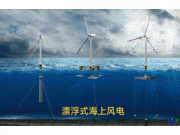
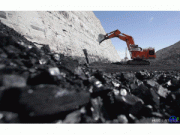
规划解读 Planning Interpretation 近日,《煤炭工业发展“十五五”规划》(以下简称《规划》)印发。作为“十五五”时期煤炭工业高质量发展的行动指南,《规划》系统回答新时期煤炭行业如何统筹供应保障与低碳转型、如何培育和发展煤炭领域新质生产力、如何推动实现煤炭消费达峰等核心命题,分别从战略定位、总量管控、产业体系、保供机制、产能治理、新旧产能迭代、科技创新、多能融合、智能升级、价值提升等主要方面作出制度创新与路径重塑。 Recently, the "15-19 Coal Industry Development Plan" (hereinafter referred to as the "Plan") was issued. As an action guideline for the high-quality development of the coal industry during the "15-19" period, the Plan systematically addresses core issues such as how the coal industry should balance supply guarantee and low-carbon transformation in the new era, how to cultivate and develop new quality productive forces in the coal sector, and how to achieve peak coal consumption. It makes institutional innovations and path reconstructions from major aspects such as strategic positioning, total control, industrial system, supply guarantee mechanism, capacity governance, iteration of old and new capacities, scientific and technological innovation, multi-energy integration, intelligent upgrading, and value enhancement. 针对《规划》中的新提法、新要求,本报记者专访了煤炭工业规划设计研究院党委书记、董事长汪有刚。 In response to the new proposals and requirements in the "Plan", our reporter conducted an interview with Wang Yougang, the Party Secretary and Chairman of the Coal Industry Planning and Design Institute. 汪有刚表示,对煤炭行业而言,未来必须跳出煤炭单一开采的发展思路,主动适配新型能源体系建设要求,平衡保供底线与低碳转型长期目标,锚定智能化、绿色化、融合化转型之路,以科技创新赋能产业升级,以系统治理保障长效发展,切实扛起支撑建设能源强国、构建新型能源体系的时代使命。 Wang Yougang stated that for the coal industry, in the future, it must abandon the single-minded development approach of solely extracting coal, and actively adapt to the requirements of the new energy system construction. It must balance the supply guarantee bottom line with the long-term goal of low-carbon transformation, and firmly follow the path of intelligent, green and integrated transformation. With technological innovation, it should empower industrial upgrading, and with systematic governance, it should ensure long-term development. It must truly shoulder the historical mission of supporting the construction of an energy power and building a new energy system. Part1完整界定煤炭新定位——发挥重要基础保障与系统调节作用 Part 1: Clearly define the new role of coal - play an important role as a basic support and system regulator 《规划》开宗明义提出煤炭是我国基础能源,攸关国计民生和国家能源安全,在能源供应体系中发挥着重要基础保障和系统调节作用。 The "Plan" begins by clearly stating that coal is a fundamental energy source for our country, directly related to national economy and people's livelihood, as well as national energy security. It plays a crucial role as a fundamental guarantee and system regulator in the energy supply system. 汪有刚表示,“十五五”时期,新型电力系统将加速构建,风光发电固有的间歇性、波动性、季节性缺陷凸显,抽水蓄能、新型储能短期内难以形成足额调节容量,极端天气、用电高峰时段电力平衡压力陡增;国际油气供应链持续动荡,外部能源输入不确定性攀升,煤炭作为国内自主可控基础能源,必须同时兼顾长期稳定保供与短时灵活调峰双重职能。叠加“十五五”经济平稳增长带动用能刚性需求,亟须重新界定煤炭在新型能源体系中的角色。 Wang Yougang stated, "During the '15-17' period, the new power system will be accelerated in its construction. The inherent intermittent, fluctuating and seasonal characteristics of wind and solar power generation will become more prominent. Pumped storage and new types of energy storage will be difficult to form sufficient regulating capacity in the short term. The pressure on power balance during extreme weather and peak electricity consumption periods will increase sharply. The international oil and gas supply chain remains unstable, and the uncertainty of external energy input has risen. Coal, as the domestic independently controllable basic energy source, must simultaneously fulfill the dual functions of long-term stable supply and short-term flexible peak shaving. Coupled with the stable economic growth during the '15-17' period that drives the rigid demand for energy, it is urgent to redefine the role of coal in the new energy system." 基础保障明确煤炭是工业原料、民生用能、电力供应稳定的压舱石,筑牢能源供应安全保障底线;系统调节赋予煤矿灵活弹性生产职能,通过产能储备等实现弹性供给,配套支撑对新能源的消纳。顶层设计上同步衔接新型能源体系建设规划,形成“新能源为主、煤炭兜底调节”的互补格局,平衡能源自主可控与绿色低碳转型两大约束条件。 Basic guarantees: Coal serves as the stabilizing factor for industrial raw materials, domestic energy consumption, and stable power supply, ensuring the bottom line of energy supply security. Systemic regulation: It endows coal mines with flexible and elastic production functions, achieving elastic supply through capacity reserves and other means, and supporting the integration and consumption of new energy. In terms of top-level design, it is also coordinated with the planning for the construction of new energy systems, forming a complementary pattern of "new energy as the mainstay, with coal serving as the backup and regulation", balancing the constraints of energy self-control and green and low-carbon transformation. “该定位旨在重塑煤炭行业发展逻辑,推动煤炭行业从单纯‘燃料供给端’升级为能源系统‘稳定调节器’。生产侧倒逼煤矿建立配套的弹性生产机制、建设产能储备,消费侧加速煤电灵活性改造、拓展调峰服务市场,产业链催生矿区煤炭与风光耦合等新业态。”汪有刚指出,“同时,该定位旨在统一煤炭行业对煤炭转型的认知,明确煤炭不是短期替代对象,而是新型电力系统不可或缺的配套支撑,指引煤矿企业同步布局先进产能与转型产业。” This positioning aims to reshape the development logic of the coal industry, promoting its transformation from a mere "fuel supply end" to a "stable regulator" of the energy system. The production side is forcing coal mines to establish corresponding flexible production mechanisms and build capacity reserves. The consumption side is accelerating the flexibility transformation of coal power and expanding the market for peak-load services. The industrial chain is giving rise to new business models such as the coupling of coal from mining areas with renewable energy. Wang Yougang pointed out, "At the same time, this positioning aims to unify the coal industry's understanding of coal transformation, clearly stating that coal is not a short-term substitute but an indispensable supporting component of the new power system, guiding coal mining enterprises to simultaneously invest in advanced production capacity and transformation industries." Part2明确行业总量转型目标——统筹安全供应与消费达峰 Part 2:clearly sets the overall transformation goal for the industry - to balance safe supply and achieve peak consumption. 《规划》提出以碳达峰碳中和为牵引,在保障能源安全供应前提下,推动煤炭消费顺利达峰。 The plan proposes to use carbon peak and carbon neutrality as the guiding principle, and under the premise of ensuring energy security supply, to promote the smooth peak of coal consumption. 汪有刚说:“核心逻辑是‘先立后破、平稳达峰’。” Wang Yougang said: "The core logic is 'establish first and then dismantle, achieving peak emissions smoothly'." “双碳”战略实施以来,煤炭减量替代持续推进,但过往政策仅侧重分区域控煤、重点行业节能,未在国家级行业五年规划中明确消费达峰这一刚性导向。从供需基本面看,新能源装机持续高速扩容,钢铁、建材用煤替代稳步落地,煤炭消费已进入高位平台期,具备达峰基础;同时煤炭作为碳排放的最大来源,必须提前规划好总量拐点。过去,部分地区存在控煤“一刀切”、保供与减碳对立的矛盾,缺少顶层统筹的达峰实施路径。 Since the implementation of the "dual carbon" strategy, the reduction and substitution of coal has been continuously advancing. However, previous policies only focused on controlling coal consumption in specific regions and promoting energy conservation in key industries, without clearly setting a mandatory goal of peak consumption in the national-level industry five-year plans. From the supply and demand fundamentals, the installed capacity of new energy sources has continued to expand at a high speed, and the substitution of coal for steel and building materials has been steadily implemented. Coal consumption has entered a plateau phase and has the foundation for reaching the peak; at the same time, as the largest source of carbon emissions, the total amount of coal must be planned for a turning point. In the past, there were contradictions such as "one-size-fits-all" coal control policies and the opposition between supply guarantee and carbon reduction in some regions, and there was a lack of a top-level coordinated implementation path for reaching the peak. 汪有刚表示,该提法标志着煤炭行业发展主线由“增产保供”转向“控量提质、转型增效”,倒逼煤炭行业彻底摆脱对规模扩张路径的依赖,将竞争焦点从产量规模转向清洁高效、原料化利用价值。上游开发端加速优质产能置换,下游冶金、化工等行业走低碳耦合绿电路线。同时,催生碳足迹核算、甲烷控排等新兴管理赛道,为煤炭长期减量、有序转型划定清晰的时间窗口,实现转型与保供协同并行。 Wang Yougang stated that this proposition indicates that the main thread of the coal industry's development has shifted from "increasing production and ensuring supply" to "controlling output and improving quality, transforming and enhancing efficiency". This has compelled the coal industry to completely break away from its reliance on the path of scale expansion and shift the focus of competition from production volume to clean efficiency and the value of raw material utilization. The upstream development sector is accelerating the replacement of high-quality production capacity, while the downstream industries such as metallurgy and chemicals are following a low-carbon coupling green development path. At the same time, it has given rise to new management tracks such as carbon footprint accounting and methane emission control, setting a clear time window for the long-term reduction of coal output and orderly transformation, and achieving the coordinated progress of transformation and supply guarantee. Part3确立煤炭行业发展主线——以建设现代煤炭产业体系,统领全部任务 Part 3:establishes the main line of the coal industry development - by building a modern coal industry system, to guide all tasks. 《规划》提出加快构建布局协同优化、供应安全稳定、开发绿色智能、利用清洁高效、治理科学规范的现代煤炭产业体系。九方面重点任务、五大专项工程全部围绕主线展开。 The plan proposes to accelerate the establishment of a modern coal industry system that is coordinated and optimized in layout, ensures stable supply, is green and intelligent in development, clean and efficient in utilization, and is scientifically and properly governed. All nine key tasks and five special projects are all centered around this main theme. 据悉,煤炭行业当前存在布局分散、产业链割裂、智能绿色发展不均衡、治理碎片化等短板。同时,能源强国建设要求煤炭产业实现全链条现代化,传统单一开采产业模式无法满足新型能源体系的配套需求。 It is reported that the current coal industry has several shortcomings, including scattered layout, fragmented industrial chain, uneven intelligent green development, and fragmented governance. At the same time, the construction of an energy power country requires the coal industry to achieve full-chain modernization, and the traditional single mining industry model cannot meet the supporting demands of the new energy system. 汪有刚表示,主线总目标是重构煤炭产业发展框架,推动行业由单一开采产业模式向全产业链现代化综合产业转型。煤矿企业发展逻辑转向煤炭上下游、全链条布局,引导大型煤矿企业向综合能源服务商转型;煤炭行业资源配置向规模化、集约化、一体化项目倾斜;地方行业管理形成有力抓手,统筹矿区规划、产能建设、生态治理、新能源配套协同推进。同时,为煤炭行业新质生产力培育明确技术路径,整合智能、绿色、多能融合、高端煤化工等转型赛道,实现产业系统性、整体性升级。 Wang Yougang stated that the overall goal of the main line is to restructure the framework of the coal industry development, and promote the industry to transform from a single mining industry model to a modernized comprehensive industry with a full industrial chain. The development logic of coal mining enterprises has shifted to a layout covering the upstream and downstream of coal and the entire chain, guiding large coal mining enterprises to transform into comprehensive energy service providers; the resource allocation of the coal industry has tilted towards large-scale, intensive, and integrated projects; local industry management has become a powerful tool, coordinating the overall planning of the mining area, capacity construction, ecological governance, and the integration of new energy support. At the same time, clear technical paths have been defined for the cultivation of new quality productive forces in the coal industry, integrating intelligent, green, multi-energy integration, and high-end coal chemical industries as transformation tracks, to achieve systematic and holistic upgrading of the industry. Part4构建多层级保供缓冲载体——建立产品、产能和产地“三位一体”,储备体系配套平急转换机制 Part 4: Establishing Multi-level Supply Assurance Buffer Caches - Forming a "trinity" of products, production capacity, and production sites, and establishing a supporting system for emergency and normal situations conversion mechanisms 《规划》提出完善煤炭储备体系,统筹加强产品、产能和产地储备,2030年建成1亿吨/年以上产能储备;要求新建煤矿配套储备产能,创新平急转换机制,建立储备煤矿统一调度、弹性生产演练制度。 The plan proposes to improve the coal reserve system, comprehensively strengthen product, production capacity and production site reserves, and by 2030, establish a reserve capacity of over 100 million tons. It also requires that new coal mines be equipped with reserve capacity, innovate the emergency conversion mechanism, and establish a unified scheduling and flexible production drill system for reserve coal mines. 当前,煤炭储备仅侧重电厂、港口产品实物储备,产能储备仅局部试点,缺乏产地资源储备统筹,储备体系碎片化。现有静态产品储备调节空间有限,缺少可快速释放的弹性产能。 Currently, coal reserves are mainly focused on physical inventory at power plants and ports. Capacity reserves are only being piloted in certain areas, and there is a lack of overall planning for resource reserves at the production sites. The reserve system is fragmented. The existing static product reserves have limited adjustment space and lack elastic capacity that can be quickly released. 汪有刚说:“储备体系与弹性生产机制重塑煤炭保供模式,实现保供能力从静态库存向动态产能升级。对企业而言,大型煤矿通过新增储备产能、弹性生产业务,拓展季节性调峰经营收益;对市场而言,有效平抑煤价大幅波动,减少极端时段供需失衡风险;对行业治理而言,有了常态化、制度化应急保障工具,弱化短期增产压产对行政调控的依赖。” Wang Yougang said: "The reserve system and the flexible production mechanism have restructured the coal supply guarantee model, achieving an upgrade of the supply guarantee capability from static inventory to dynamic production capacity. For enterprises, large coal mines can expand their seasonal peak-load operation income by adding reserve production capacity and implementing flexible production operations; for the market, it effectively stabilizes the sharp fluctuations in coal prices and reduces the risk of imbalance in supply and demand during extreme periods; for industry governance, with the establishment of regular and institutionalized emergency guarantee tools, the reliance of administrative regulation on short-term production increase or reduction is weakened." Part5出台统一产能管控制度——实施全部新增煤矿,产能“一本账”管理 Part 5: Introduces a unified production capacity management system - Implementing a "single account" management system for all newly added coal mines regarding production capacity 《规划》提出“十五五”新增产能纳入“一本账”后组织实施,合理安排接续产能规模。 The "Plan" stipulates that the new production capacity added during the "14th Five-Year Plan" period shall be implemented in accordance with a unified plan, and the scale of subsequent production capacity shall be reasonably arranged. 汪有刚介绍,随着五大煤炭基地集中开发、产能置换常态化运行,亟须建立全国统一的台账管理制度,实现所有新增产能全生命周期闭环管控,从源头规范产能投放节奏与区域分布。产能“一本账”将新建、改扩建、核增、置换等所有新增产能纳入统一登记,覆盖项目核准、建设、投产、退出全流程,打通能源、应急管理、自然资源、税务等部门的数据共享通道。 Wang Yougang introduced that with the concentrated development of the five major coal bases and the regular operation of capacity replacement, it is urgent to establish a unified ledger management system across the country to achieve full lifecycle closed-loop control of all new production capacity, and to standardize the production capacity release rhythm and regional distribution from the source. The "one-account" system will incorporate all new production capacity (including new construction, expansion, increase in capacity, and replacement) into unified registration, covering the entire process from project approval, construction, commissioning, to withdrawal, and will open data sharing channels with departments such as energy, emergency management, natural resources, and taxation. 汪有刚表示,该制度有效补齐煤炭产能管理短板,规范煤矿企业产能项目申报、置换流转流程,减少跨区域产能交易信息不对称;行业主管部门依托台账精准研判供需中长期走势,科学制定接续产能建设规划。同时,建立产能长效监管机制,严厉打击超能力生产、违规新建矿井的行为,净化市场竞争环境,为先进优质产能有序释放、落后产能平稳退出提供制度支撑。 Wang Yougang stated that this system effectively fills the gaps in coal production capacity management, standardizes the procedures for coal mining enterprises to report and transfer their production capacity projects, and reduces information asymmetry in cross-regional production capacity transactions. The industry authorities rely on the ledger to accurately predict the medium- and long-term trends of supply and demand, and scientifically formulate plans for the construction of successor production capacity. At the same time, a long-term supervision mechanism for production capacity is established to severely crack down on over-capacity production and the construction of new mines without authorization, purify the market competition environment, and provide institutional support for the orderly release of advanced and high-quality production capacity and the smooth exit of outdated production capacity. Part6建立差异化产能迭代路径——系统落地先立后破,统筹煤矿退出与区域保供 Part 6:Establishing a Differentiated Capacity Iteration Path - System Implementation: Proceed with Planning First, Then Break Through, and Coordinate Coal Mine Closure with Regional Supply Assurance 《规划》提出坚持先立后破,统筹煤矿关闭退出与区域供应保障,按照市场化法治化原则,推动落后产能煤矿有序退出。 The plan proposes to adhere to the principle of "building first and then eliminating", coordinating the closure and exit of coal mines with regional supply security. In accordance with market-oriented and law-based principles, it will promote the orderly exit of backward production capacity coal mines. 过去,我国个别产煤地区出现“一刀切”关停,部分产煤省份关闭节奏过快,导致区域和相邻省份出现保供缺口,存在破而未立的转型阵痛。我国不同地区之间资源禀赋、供需格局差异显著,西部和北部五大基地资源富集,东中部资源枯竭、用能需求集中,西南、东北灾害严重的中小型煤矿数量多,统一关停标准无法适配区域实际。过往的退出政策侧重安全环保单一指标,未能同步统筹接续产能、职工安置、区域供需平衡,亟须差异化、系统化建立先立后破的退出机制,平衡减量转型与能源稳定供应。 In the past, some coal-producing regions in our country adopted a "one-size-fits-all" approach to shut down coal mines, and some provinces with coal production experienced a rapid shutdown pace, resulting in supply shortages in certain regions and adjacent provinces. This led to transitional pains of transformation that were broken but not established. Different regions in our country have significant differences in resource endowment and supply-demand patterns. The five major coal bases in the west and north are rich in resources, while the eastern and central regions have depleted resources and concentrated energy demand. There are a large number of small and medium-sized coal mines in the southwest and northeast that are prone to disasters. A uniform shutdown standard cannot be adapted to the actual conditions of each region. The previous exit policies focused solely on safety and environmental protection indicators, and failed to coordinate the establishment of successor capacity, the resettlement of workers, and regional supply-demand balance. It is urgent to establish a differentiated and systematic exit mechanism that prioritizes establishment before breaking, to balance the reduction of production and the transition to a new model while ensuring stable energy supply. 汪有刚说:“系统化差异化先立后破机制将重塑煤炭产能迭代逻辑,彻底化解转型与保供对立的矛盾。区域层面实现供需动态平衡,避免局部时段用能短缺;企业层面引导提前布局先进产能、多元转型产业;从业人员层面配套煤矿转产、矿区新能源就业渠道,保障行业稳定。同时,以优质先进产能置换低效落后产能,持续提升煤炭行业规模化、集约化开发水平,实现煤炭产业结构平稳迭代升级。” Wang Yougang said: "The systematic and differentiated mechanism of 'establishing first and then breaking' will reshape the iteration logic of coal production capacity, completely resolving the contradiction between transformation and supply guarantee. At the regional level, a dynamic balance of supply and demand will be achieved, avoiding energy shortages in certain local periods; at the enterprise level, it will guide the early layout of advanced production capacity and diversified transformation industries; at the employee level, it will provide employment channels for coal mine transformation and new energy in the mining area, ensuring industry stability. At the same time, high-quality advanced production capacity will be exchanged for low-efficiency and backward production capacity, continuously improving the scale and intensive development level of the coal industry, and achieving a smooth iteration and upgrading of the coal industry structure." Part7:设立专项技术攻关载体——技术装备创新,引领行业新质生产力培育 Part 7: Establish specialized technical research and development platforms - technological equipment innovation, leading the cultivation of new quality productive forces in the industry 《规划》单列煤炭技术装备创新工程,划分关键技术研发、核心装备突破、产业化试点推广三大板块。 The "Plan" separately sets aside the coal technology and equipment innovation project, dividing it into three major sections: key technology research and development, breakthroughs in core equipment, and industrialization pilot promotion. 当前,煤炭核心装备、工业软件、深部开采、低碳转化等关键技术存在“卡脖子”短板,特别是千米深井掘进装备、煤矿专用AI(人工智能)大模型、CCUS(碳捕集、利用与封存)规模化技术、低浓度瓦斯利用装备仍需持续攻关。智能化、绿色化、低碳化转型倒逼装备技术全面升级,新型能源体系对煤基多能耦合、深部资源开发技术提出了更高要求。 Currently, there are "leakage" shortcomings in key technologies such as core coal mining equipment, industrial software, deep mining, and low-carbon conversion. In particular, equipment for drilling deep wells, specialized AI (artificial intelligence) models for coal mines, large-scale CCUS (carbon capture, utilization and storage) technologies, and equipment for utilizing low-concentration gas still require continuous research and development. The transformation towards intelligence, greenness, and low-carbonization is forcing a comprehensive upgrade of equipment technology. The new energy system has set higher requirements for coal-based multi-energy coupling and deep resource development technologies. 汪有刚表示,科技创新专项工程旨在确立技术驱动高质量发展的核心路线,推动煤炭行业由装备引进、模仿改造转向自主原创攻关。产业链上游煤机制造迎来国产替代窗口期,培育煤炭高端装备新兴赛道;煤矿生产端依托新技术实现少人无人开采、深部资源安全开发;低碳转化领域突破CCUS、煤基新材料产业化瓶颈,拓展煤炭高端原料利用空间。同时,重塑煤矿企业核心竞争力评价标准,使创新能力成为优质矿井、龙头企业的核心标识,加速行业新质生产力培育,为智能、绿色、多能融合转型发展提供技术支撑。 Wang Yougang stated that the scientific and technological innovation special project aims to establish the core route of technology-driven high-quality development, and to promote the coal industry to shift from equipment importation, imitation and modification to independent original research and development. The upstream coal machinery manufacturing industry has entered a window period for domestic substitution, and the cultivation of a new track for high-end coal equipment has been initiated; the production end of coal mines relies on new technologies to achieve less-person or unmanned mining and safe development of deep resources; in the low-carbon transformation field, breakthroughs have been made in CCUS and the industrialization of coal-based new materials, expanding the utilization space of high-end raw materials of coal. At the same time, the core competitiveness eva luation standards of coal mining enterprises have been reshaped, making innovation ability the core identifier of high-quality mines and leading enterprises, accelerating the cultivation of new quality productive forces in the industry, and providing technical support for the transformation and development towards intelligent, green and multi-energy integration. Part8:统筹全场景协同共生布局——系统化推进煤炭与新能源融合发展 Part 8: Coordinating the layout of integrated collaboration and symbiosis across all scenarios - Systematically promoting the integration and development of coal and new energy 《规划》提出要有效盘活矿区土地等要素资源,推进光伏风电产业发展。 The plan proposes to effectively utilize the land and other resource assets in the mining area and promote the development of photovoltaic and wind power industries. 当前,我国各个矿区存在大量闲置的采煤沉陷区、工业广场、排土场、复垦土地,具备风光开发潜力;煤矿井下、矿区运输、供热系统能耗高,自用煤消耗量大;煤电调峰与风光发电天然互补,但缺少一体化协同开发机制。煤炭行业长期存在采煤与新能源割裂发展、矿区绿电消纳不足、风光储能配套滞后等问题,未能有效盘活矿区土地、瓦斯、余热余压等资源,错失多能协同降碳、增效发展机遇。 Currently, there are a large number of idle coal mining subsidence areas, industrial squares, spoil dumps, and reclaimed land in various mining areas in our country, which have potential for wind and solar energy development; the energy consumption in coal mines underground, in mining area transportation, and in heating systems is high, and the consumption of self-used coal is large; wind power and photovoltaic power generation can be naturally complementary, but there is a lack of an integrated and coordinated development mechanism. The coal industry has long suffered from the separation of coal mining and new energy development, insufficient green power consumption in mining areas, and lagging photovoltaic and energy storage support. These problems have prevented the effective revitalization of resources such as mining area land, gas, waste heat, and waste pressure, and have missed the opportunities for multi-energy coordination to reduce carbon emissions and increase efficiency. 汪有刚表示:“系统化多能融合将开辟煤矿企业第二增长曲线,彻底打破‘煤矿仅能挖煤’的单一业态局限。” Wang Yougang said, "Systematic multi-energy integration will open up a second growth curve for coal mining enterprises, completely breaking the single business model limitation of 'coal mines can only extract coal'." 存量矿区盘活闲置土地资源,新增风光发电收益;矿区自用能源清洁替代大幅降低开采环节碳排放,打造零碳低碳示范矿区;煤电与风光发电互补提升系统调节价值,增强煤电新型电力系统配套竞争力;煤化工耦合绿氢实现原料低碳化,延伸高端绿色煤基新材料产业链。同时,统筹能源发展与碳排放管理,推动煤矿企业转型为综合能源服务商,形成“煤炭+风光+储能+瓦斯”多元产业格局,大幅拓展煤炭行业绿色转型空间,提升综合盈利能力。 Revitalize the idle land resources in existing mining areas, generate additional wind and solar power income; replace the self-used energy with clean sources, significantly reducing carbon emissions in the mining process and creating a zero-carbon and low-carbon demonstration mining area; complement coal power with wind and solar power generation to enhance the system's regulation value and strengthen the competitiveness of coal power in the new power system; couple coal chemical industry with green hydrogen to achieve low-carbon raw material utilization and extend the high-end green coal-based new material industrial chain. At the same time, coordinate energy development with carbon emission management, promote coal mining enterprises to transform into comprehensive energy service providers, form a "coal + wind + storage + gas" diversified industrial pattern, significantly expand the green transformation space of the coal industry, and enhance the comprehensive profitability. Part9:定调新阶段智能化建设核心导向——由规模化新建转向,提质增效常态化运行 Part 9: Set the Core Direction for the New Stage of Intelligent Construction - Shift from Large-scale New Construction to Regularized Operation for Quality Improvement and Efficiency Enhancement 《规划》明确推动煤矿智能化迭代升级,加快全系统智能化煤矿建设。 The "Plan" clearly states that efforts will be made to promote the iterative upgrading of coal mines and accelerate the construction of fully-intelligent coal mines across the entire system. “十四五”以来,煤炭主产区结合实际制定智能化实施方案,细化配套支持政策,加快科技创新应用,建成一批技术先进、引领性强的智能化试点煤矿,减人增安提效成效显著,煤矿智能化建设进入加快发展、纵深推进的新阶段。但是,智能化工作仍面临着建设进展不平衡、运行水平有待提升、核心技术装备支撑不足、人才保障能力亟待加强等问题。随着智能化煤矿产能占比突破65%,煤炭行业发展由增量建设转入存量提质阶段。 Since the "14th Five-Year Plan" period, the main coal-producing regions have formulated intelligentization implementation plans based on their actual conditions, detailed supporting policies, and accelerated the application of scientific and technological innovation. A number of advanced and highly influential intelligent pilot coal mines have been built, achieving remarkable results in reducing personnel, enhancing safety, and improving efficiency. The intelligentization construction of coal mines has entered a new stage of accelerated development and in-depth advancement. However, the intelligentization work still faces problems such as uneven progress in construction, the need for improvement in operational levels, insufficient support from core technologies and equipment, and the urgent need to strengthen the guarantee capacity for talents. With the capacity share of intelligent coal mines exceeding 65%, the development of the coal industry has shifted from incremental construction to the stage of improving the quality of existing resources. “智能化导向迭代推动煤炭行业数字化转型提质增效,解决以往智能化‘好看不好用’的落地难题。生产端实现综采、掘进常态化少人无人作业,持续减少井下高危岗位用工,提升安全保障水平;管理端依托矿山大模型实现智能调度、灾害提前预警,大幅减少安全隐患;资产端盘活已投入的智能化设备价值,降低运维能耗与生产成本;行业发展重心从比拼智能化建设数量转向重视常态化运行效率、安全减人实效,推动煤矿智能化从示范工程转变为标准化、常态化生产的必备载体,实现减人增安提效。”汪有刚说。 "Intelligent guidance-driven iterations have promoted the digital transformation, quality improvement and cost reduction in the coal industry, addressing the previous challenges of intelligent systems being merely 'attractive but not practical' in implementation. The production end has achieved regular, unmanned and less-person-intensive operations in comprehensive mining and tunneling, continuously reducing the number of workers in high-risk underground positions and enhancing safety levels; the management end has utilized the mine's large model to achieve intelligent scheduling and early disaster warning, significantly reducing safety hazards; the asset end has revitalized the value of already invested intelligent equipment, reducing operation energy consumption and production costs; the industry's development focus has shifted from competing on the quantity of intelligent construction to emphasizing the efficiency of regular operation, safety reduction through personnel reduction, and promoting the transformation of coal mines from demonstration projects to essential carriers for standardized and regular production, achieving personnel reduction, safety improvement and efficiency enhancement." Wang Yougang said. Part10:构建全链条品质管控体系——以商品煤质量提升,助推清洁高效价值攀升 Part 10: Establishing a Complete Chain Quality Control System - Enhancing the Quality of Coal Products to Drive the Rise of Clean and Efficient Value 《规划》设立商品煤质量提升专项工程,构建“洗选升级—标准完善—全流程管控—分质利用”完整政策链条。 The "Plan" has established a special project for improving the quality of commercial coal, and has constructed a complete policy chain of "upgrade in washing and selection - improvement of standards - full-process control - differentiated utilization". 煤炭行业长期存在原煤入选不均衡、分质分级利用不足、流通环节煤质管控缺位、低端动力煤占比偏高的问题;商品煤标准化、定制化程度低,灰分、硫分等含量波动大,加剧下游电厂、工业窑炉能耗与污染物排放;富油煤、炼焦煤等稀缺煤种混配利用,资源价值未被充分挖掘;缺少覆盖洗选、储运、交易、使用全流程质量监管制度,煤炭“重产量、轻品质”粗放利用模式制约清洁高效转型与价值提升。 The coal industry has long faced problems such as uneven selection of raw coal, insufficient utilization of different quality and grades of coal, absence of quality control in the circulation process, and a high proportion of low-end thermal coal. The standardization and customization of commercial coal are low, with significant fluctuations in ash content, sulfur content, etc., which exacerbates the energy consumption and pollutant emissions of downstream power plants and industrial kilns. The mixed utilization of scarce coal types such as rich-oil coal and coking coal has not fully tapped their resource value. There is a lack of a quality supervision system covering the entire process of washing, storage, transportation, and use, and the "heavy on output, light on quality" extensive utilization mode of coal restricts the clean and efficient transformation and value enhancement. 汪有刚表示,商品煤质量提升重构煤炭价值逻辑,行业竞争从产量规模竞争转向品质、综合利用价值竞争。上游煤矿精细化洗选、分质配煤,大幅提升煤炭附加值,稀缺煤种资源实现效益最大化;下游电厂、工业企业依托高品质商品煤降低能耗、环保治理成本,助力散煤减量、工业窑炉清洁替代;市场端形成标准化煤质交易体系,减少供需煤质纠纷,稳定中长期合同履约;全产业链推动煤炭由低端燃料向清洁燃料、高端化工原料双向升级,实现资源集约化利用、减排增效协同共赢。 Wang Yougang stated that the improvement in the quality of coal products has restructured the value logic of the coal industry. The industry competition has shifted from the competition based on production scale to the competition based on quality and the value of comprehensive utilization. Upstream coal mines have carried out refined washing and classified coal blending, significantly increasing the added value of coal. Scarce coal types have achieved maximum benefits. Downstream power plants and industrial enterprises have reduced energy consumption and environmental protection costs by relying on high-quality coal products, helping to reduce the consumption of coal for scattered use and achieving clean replacement of industrial kilns. At the market end, a standardized coal quality trading system has been formed, reducing disputes over coal quality in supply and demand, and stabilizing the performance of medium- and long-term contracts. The entire industry chain has promoted the upgrading of coal from low-end fuel to both clean fuel and high-end chemical raw materials, achieving resource intensive utilization, and achieving a win-win situation of emission reduction and efficiency improvement through collaboration. |