


免职声明:本网站为公益性网站,部分信息来自网络,如果涉及贵网站的知识产权,请及时反馈,我们承诺第一时间删除!
This website is a public welfare website, part of the information from the Internet, if it involves the intellectual property rights of your website, please timely feedback, we promise to delete the first time.
电话Tel: 13002979178 OR 邮箱Email: Lngbbs@qq.com
摘要:英国剑桥大学科研团队研制出一种新型太阳能反应堆。该装置利用废旧铅酸蓄电池中提取的废酸,将饮料瓶、尼龙织物及聚氨酯泡沫等难回收塑料“拆解”,并高效转化为清洁氢气与高附加值工业化学品。此项“太阳能酸光重整技术”有望破解全球“塑料围城”难题。相关研究成果最新发表于《焦耳》杂志。
|
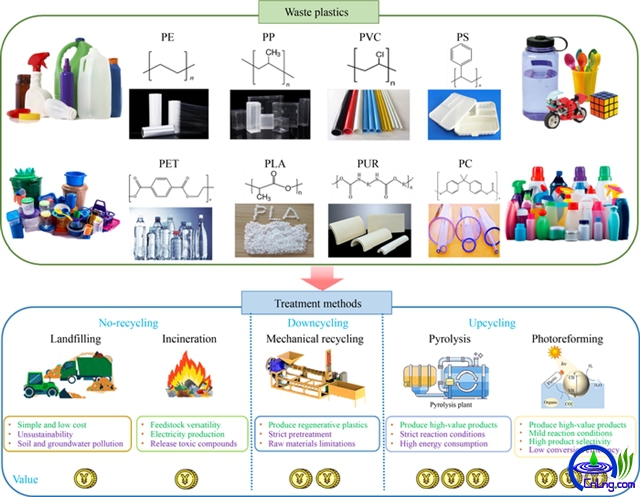
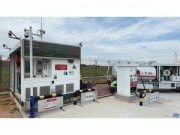
英国剑桥大学科研团队研制出一种新型太阳能反应堆。该装置利用废旧铅酸蓄电池中提取的废酸,将饮料瓶、尼龙织物及聚氨酯泡沫等难回收塑料“拆解”,并高效转化为清洁氢气与高附加值工业化学品。此项“太阳能酸光重整技术”有望破解全球“塑料围城”难题。相关研究成果最新发表于《焦耳》杂志。 A research team from the University of Cambridge in the UK has developed a new type of solar reactor. This device utilizes the waste acid extracted from used lead-acid batteries to "break down" difficult-to-recycle plastics such as beverage bottles, nylon fabrics, and polyurethane foam, and efficiently converts them into clean hydrogen gas and high-value industrial chemicals. This "solar acid photoreforming technology" is expected to solve the global "plastic encirclement" problem. The latest research results have been published in the journal "Joule". 酸解法虽早已用于塑料降解,但业界长期缺乏一种兼具低成本、可量产且耐强酸腐蚀的光催化剂。本次突破的核心,正是团队设计出一种“强韧”的光催化材料:它既能抵御酸液的强烈侵蚀,又能巧妙“变废为宝”,有效利用原本需中和废弃的蓄电池废酸。 Although acid hydrolysis has long been used for plastic degradation, the industry has long lacked a type of photocatalyst that is low-cost, producible, and resistant to strong acid corrosion. The core of this breakthrough lies in the team's design of a "robust" photocatalytic material: it can withstand the intense erosion of acid solutions and ingeniously "transform waste into treasure", effectively utilizing the waste acid from discarded batteries. 最新方法先以废酸预处理塑料,打断其冗长的聚合物链,将其解聚为乙二醇等基础分子片段;随后在日光照射下,光催化剂将其转化为氢气与乙酸(食醋主要成分)。实验室数据显示,该反应器产氢效率显著,乙酸合成选择性极高,且连续稳定运行逾260小时,性能毫无衰减。 The latest method first pre-treats the plastic with waste acid to break its long polymer chains and decompose them into basic molecular fragments such as ethylene glycol; then, under sunlight exposure, the photocatalyst converts them into hydrogen and acetic acid (the main component of vinegar). Laboratory data shows that the hydrogen production efficiency of this reactor is remarkable, the selectivity for acetic acid synthesis is extremely high, and it can operate continuously and stably for over 260 hours without any performance decline. 该工艺兼容性极强,不仅适用于常规塑料,更能高效处理尼龙、聚氨酯等现行回收体系难以企及的“硬骨头”。此外,该技术不仅兼容高纯度试剂酸,更能无缝对接废旧蓄电池废酸。全球每年更换的数以亿计的铅酸电池中,酸液占比达20%至40%。新工艺则让废酸重获新生,真正实现“以废治废”。 This process is highly compatible and can be applied not only to conventional plastics but also to handle "difficult-to-recycle materials" such as nylon and polyurethane, which are beyond the reach of current recycling systems. Moreover, this technology is not only compatible with high-purity acid reagents but can also seamlessly connect with the waste acid from used batteries. In the billions of lead-acid batteries replaced worldwide each year, the acid content accounts for 20% to 40%. The new process rejuvenates the waste acid and truly achieves "recycling with waste". 相较于同类光重整技术,新工艺成本降低近一个数量级。团队强调,该技术并非意在替代传统回收体系,而是作为有力补充,专攻当前缺乏可行出路的重度污染或混合塑料废弃物,助力循环经济的实现。 Compared with similar photoreforming technologies, the new process reduces costs by nearly an order of magnitude. The team emphasizes that this technology is not intended to replace the traditional recycling system, but rather serves as a powerful supplement, focusing on severely contaminated or mixed plastic waste that currently lacks feasible solutions, and contributing to the realization of the circular economy. |