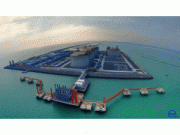
LNG 气化调压撬是将 LNG(液化天然气)从液态转化为气态,并将压力调节至下游管网所需压力的一体化成套设备,广泛用于 LNG 卫星站、工业用户等场景,核心作用是实现 LNG 的高效、安全气化与稳定供气。
The LNG gasification and pressure regulation skid is an integrated set of equipment that converts LNG (liquefied natural gas) from liquid state to gaseous state and regulates the pressure to the required level for the downstream pipeline network. It is widely used in LNG satellite stations, industrial users and other scenarios. Its core function is to achieve efficient, safe gasification of LNG and stable gas supply.
其核心构成、工作流程及安全要点可分为以下三个模块。
Its core components, working procedures and safety points can be divided into the following three modules.
LNG 气化调压撬将多个功能单元集成在一个钢结构底座上,减少现场安装工作量,主要包含以下系统:
The LNG gasification and pressure regulation module integrates multiple functional units onto a steel structure base, reducing the on-site installation workload. It mainly consists of the following systems:
气化系统:核心设备为气化器(常用空温式、水浴式),通过吸收空气或热水热量,将低温 LNG(约 – 162℃)加热气化为气态天然气(NG)。
调压系统:由调压器(通常为两级调压)、切断阀组成,将气化后 NG 的压力从储罐压力(约 0.3-0.8MPa)降至下游所需压力(如工业用户 0.1-0.4MPa),并在超压时自动切断。
计量与加臭系统:配备流量计(如涡轮流量计、超声波流量计),精确计量供气量;加臭机则按标准(通常 20-25mg/m³)向 NG 中添加四氢噻吩,便于泄漏检测。
安全保护系统:包含安全阀(超压泄压)、压力表、温度计、泄漏探测器、紧急切断阀等,实时监控设备运行状态,异常时触发停机或泄压。
1.Core composition: Integrated integration of four systems
Gasification system: The core equipment is a gasifier (commonly of air-cooled or water-cooled type), which absorbs heat from air or hot water to heat the low-temperature LNG (approximately – 162℃) and convert it into gaseous natural gas (NG).
Pressure regulating system: Composed of a pressure regulator (usually a two-stage regulator) and a shut-off valve, it reduces the pressure of NG after gasification from the tank pressure (approximately 0.3 - 0.8 MPa) to the required pressure downstream (such as 0.1 - 0.4 MPa for industrial users), and automatically shuts off in case of overpressure.
Measurement and odorization system: Equipped with flow meters (such as turbine flow meters, ultrasonic flow meters), to precisely measure the gas supply volume; the odorization machine adds tetrahydrothiophene to NG according to standards (usually 20-25mg/m³) to facilitate leak detection.
Safety protection system: It includes safety valves (for overpressure relief), pressure gauges, thermometers, leak detectors, emergency shut-off valves, etc. It continuously monitors the operating status of the equipment and triggers shutdown or pressure relief in case of any abnormalities.
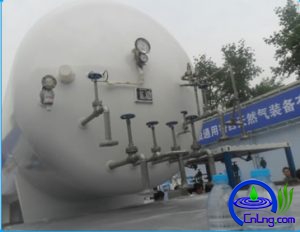
LNG 气化调压撬的工作流程清晰,可分为四个关键步骤:
The working process of the LNG gasification and pressure regulation unit is clear and can be divided into four key steps:
进料:LNG 从储罐通过低温管道输送至撬内,管道需做保冷处理,减少冷量损失。
气化:LNG 进入气化器,与空气或热水进行热交换,逐步升温并气化为气态天然气。
调压:气态天然气先经过一级调压器粗调压力,再经二级调压器精确稳压,确保压力稳定输出。
计量与输送:稳压后的天然气经流量计计量,再通过加臭机添加臭味剂,最终输送至下游管网或用户。
2. Work process: Four steps complete the conversion from liquid state to gaseous state
Feedstock: LNG is transported from the storage tank to the skid via a low-temperature pipeline. The pipeline needs to be insulated to minimize heat loss.
Gasification: LNG enters the gasifier and undergoes heat exchange with air or hot water, gradually heating up and being converted into gaseous natural gas.
Pressure regulation: Gaseous natural gas first passes through a primary pressure regulator to roughly adjust the pressure, and then goes through a secondary pressure regulator for precise and stable pressure regulation, ensuring a stable output of pressure.
Measurement and transportation: After stabilization, the natural gas is measured by a flowmeter, then the odorant is added by the odorization machine, and finally it is transported to the downstream pipeline network or users.
日常检查:每日检查设备有无泄漏(可用肥皂水检测法兰、阀门接口),气化器翅片有无结冰、堵塞,压力表、流量计读数是否正常。
启停操作:启动时需缓慢打开 LNG 进料阀,避免 LNG 流速过快导致管道冷冲击;停机时先关闭进料阀,待撬内压力降至安全范围后,关闭下游阀门。
环境要求:设备应安装在通风良好、无明火的区域,空温式气化器需避免阳光直射或强风直吹,防止气化效率波动;周边需设置防火堤、应急照明及警示标志。
维护保养:定期清理气化器翅片上的灰尘、杂物,每季度校验调压器、安全阀、流量计的精度,每年对保冷层进行检查,破损时及时修补。
3. Key Points for Safe Operation
Daily inspection: Daily check for any leaks in the equipment (flanges and valve interfaces can be tested with soapy water), check if the fins of the gasifier are frozen or clogged, and ensure that the readings of the pressure gauge and flow meter are normal.
Start-stop operation: When starting, slowly open the LNG feed valve to avoid rapid LNG flow rate that causes cold shock to the pipeline; when stopping, first close the feed valve, and wait until the pressure inside the skid drops to the safe range before closing the downstream valves.
Environmental requirements: The equipment should be installed in an area with good ventilation and without open flames. For the air-cooled vaporizer, it is necessary to avoid direct sunlight or strong wind blowing on it to prevent fluctuations in vaporization efficiency. Fire barriers, emergency lighting and warning signs should be set up around it.
Maintenance: Regularly clean the dust and debris on the fins of the vaporizer. Every quarter, calibrate the pressure regulator, safety valve, and flow meter for accuracy. Every year, inspect the insulation layer. Repair it promptly if it is damaged.